
By Karen Yvonne Hamilton
Originally published in The Florida Genealogist: Volume XLVI, Number 1, June 2023
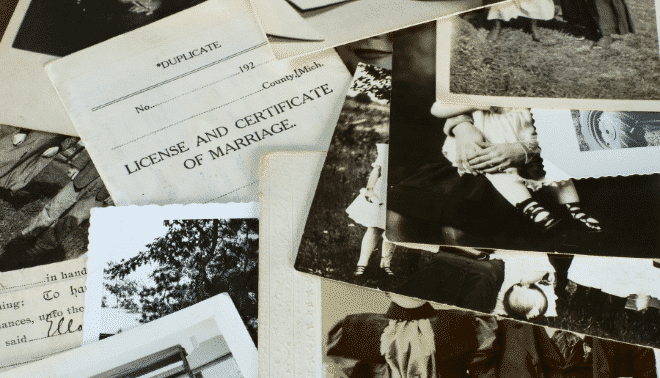
When a loved one dies, we are faced with going through their homes and cleaning everything out. What do you do with all the family history photos, documents, and artifacts of someone’s life?
A friend of mine, Florida Keys historian Richard Sites, was tasked with this when his father, George Sites, noted treasure hunter and former Everglades Park ranger, passed away suddenly in 2020. When I asked him how he dealt with all the artifacts, he replied, “The hardest thing is the emotional aspect.” As I recently lost my mother, my stepmother, and my father, I understood this immediately. Every artifact that you find comes with memories of your loved one. Perhaps memories of them telling you about the item or perhaps the memory that your loved one is no longer there to ask what a particular item is. In short, this task that you embark on, preserving history, will not be an easy one.
As the family gathers to sort out the home, much gets thrown away, items are donated, family members choose keepsake items. Those of us who are genealogists, the keepers of family history, look for the items that we can add to our research and preserve for future generations. Sometimes the treasure trove of history comes to us already neatly stored in bins or notebooks. Other times it comes to us in a jumbled mess of photos, letters, news clippings, etc. in an old suitcase. I have experienced both.
When you inherit from the family genealogist

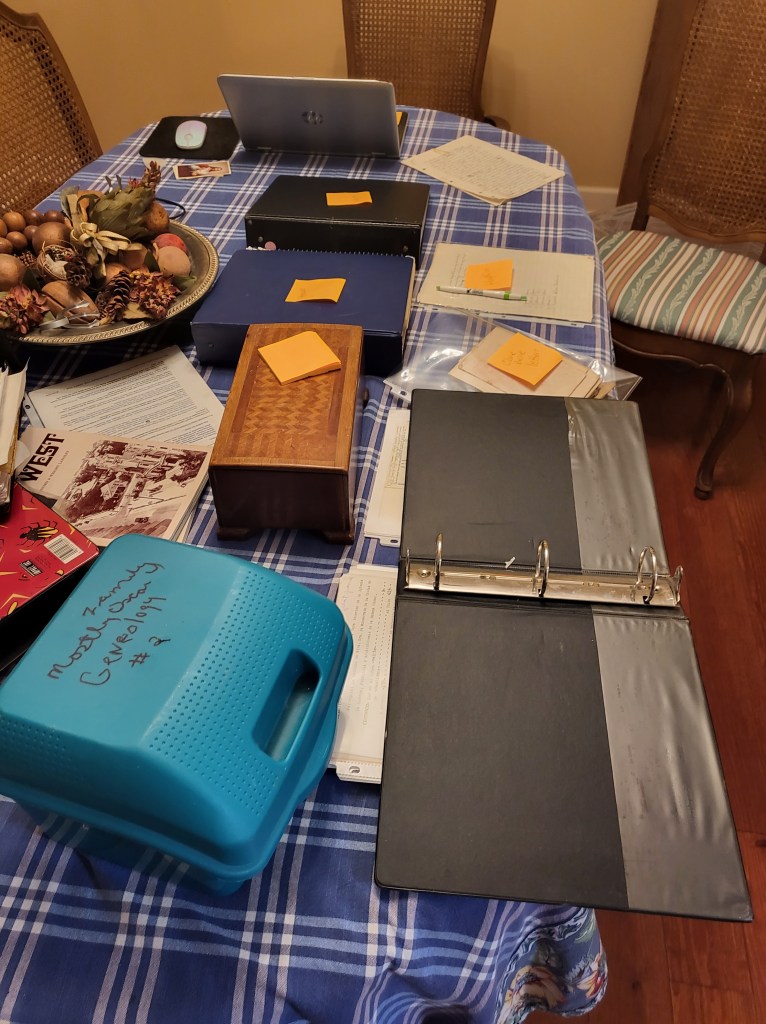
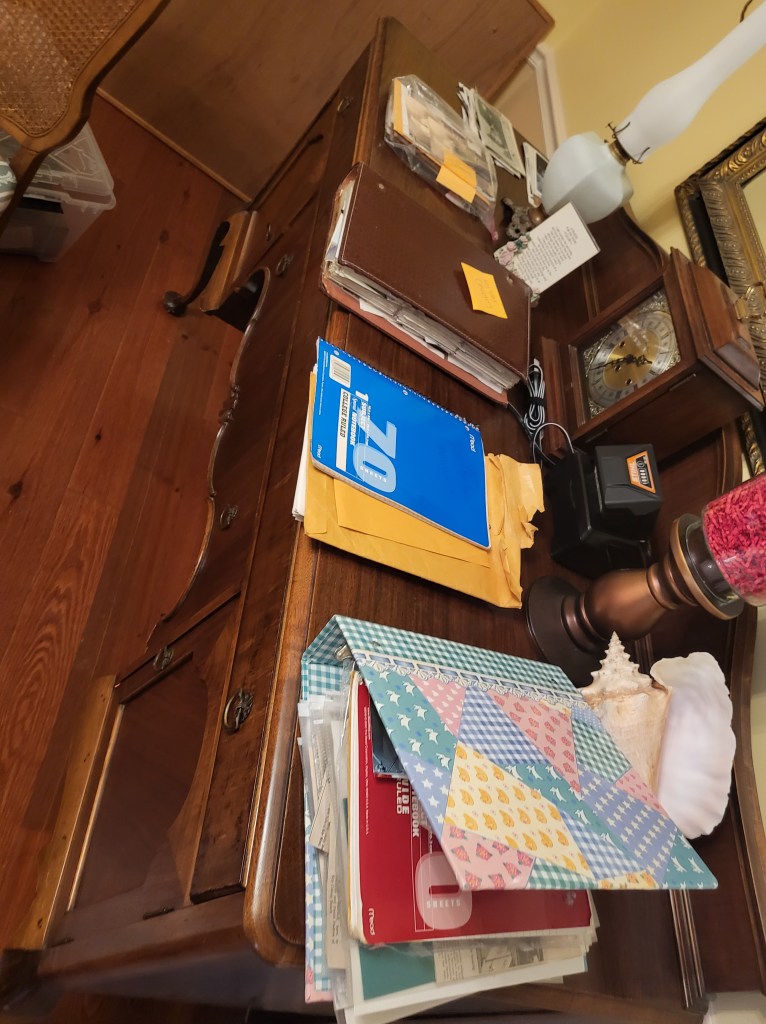
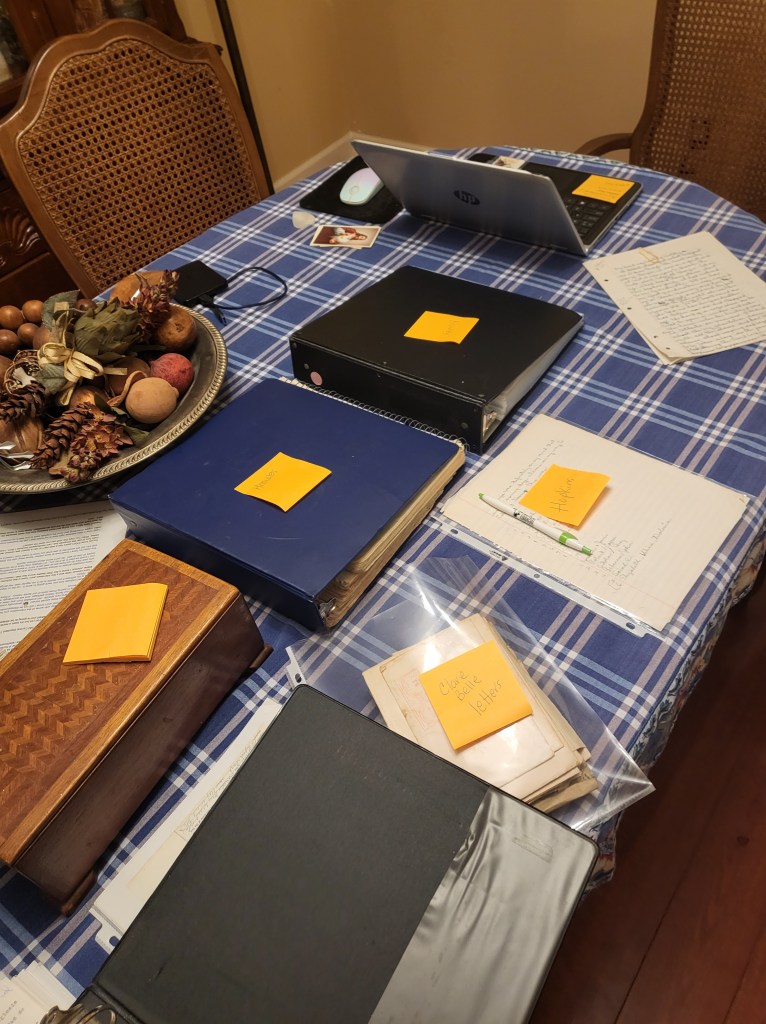
My aunt was a seasoned genealogist. When she passed away, my cousins turned over all of her decades of research to me, as they had been instructed by their mother. Her files and notes came to me in 3 ring binders and composition notebooks, which made organizing it a bit easier. Still, I had to review all of it and store it in archival boxes rather than the old binders and bins.
She had been a very organized person, so that made my job easier. She had not been technologically savvy however, so the majority of her research and artifacts had not been digitized, so it became important to ensure that her decades of research would not be lost.
I set up a system of portable filing bins and began the task of transferring Aunt Jane’s work to labeled files. This filing system enabled me to work through the notebooks and bins in an organized manner that would enable me to find information quickly on different ancestors. The filing bins stacked neatly in my office closet for future review, and because they were portable, I could pull one out at any given time and work through it.
When you inherit from a non-genealogist
When a loved one dies and they are not genealogists, meaning there is no organization of family artifacts in place, your job becomes more difficult.
The search
When my father passed away, my family and I were tasked with cleaning out the house he and my stepmother had lived in for 55 years, the house we had grown up in. Memories were everywhere and everyone wanted to take something to remember Daddy and Mom by. As you can imagine, emotions were through the roof, and this was not easy for any of us. Luckily, my family already knew that I was the historian in the group, and that I would want to preserve any historical items. I went in search of any family history that I could find. He saved everything, so I knew it was in that house somewhere. While everyone else concentrated on photos, furniture and knick-knacks, I set out to save the family history. My son found it buried at the bottom of the hall closet in a suitcase, decades old and bursting with photos, clippings, court records, and letters. There were other items scattered around the house, and it was a task to stop other family members from throwing away items that they deemed trash.
Designate a Spot
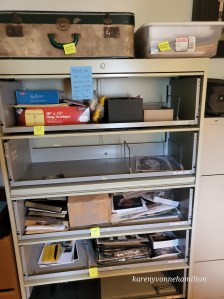
Saving the family history can be a daunting task, especially if there are bulky artifacts of general historical value to preserve as it was in my friend’s case. He ended up moving into his father’s house many months later which helped in getting his father’s artifacts sorted. You might consider a space in the garage or a bedroom in the house to start gathering items as you and family members find them. I finally designated my stepmother’s office for family history that no one was allowed into until I had a chance to review the items placed there. I begged and pleaded with everyone to please not throw one single thing away until I saw it. Mostly, they were cooperative. Soon, I had them dropping items at the designated room for me to go through.
My sister came up with the idea for me to go through dressers and designate one drawer for items I needed to review. I would later transfer the contents to the designated room. The rest of the drawers, they could do what they wanted. In tandem with this work, I began clearing a spot in my office at home for the new materials that I was finding. Because you are likely working quickly through the clearing of the deceased’s home, it is helpful to begin transferring items to the designated area in your own home as quickly as possible.
What to keep and when to let go
Not everything should be saved from the trash bin or the ‘to donate’ pile. Sifting through a life of memories is not easy, and you will find items that mean something to you but have no significance to family history or to anyone else in the family. Sites coined the perfect term for this: emotional threshold. If you are struggling with whether to keep or discard a certain item, keep it if it has an emotional tug for you. As the years pass and the grief lessens somewhat, you will arrive at that emotional threshold where you can finally let the item go. Give yourself permission to do that.
Organize
It’s very easy, as you probably already know, to get so excited by new finds that you get off track. I recommend a new filing system for this inheritance. Later, after you have a chance to look through it all, you can transfer these new documents and photos to your already chosen system. I bought a filing case that I could carry around the house if needed. Before I began going through the old suitcase full of genealogical treasures, I made folders for the people that I knew I would find there. I also made a folder for unknown items.
You have to be careful here because some items, like letters, pertain to more than one person. For instance, I found a letter from my mother to her mother-in-law (my paternal grandmother) written a week before my grandmother died in a car accident. The letter referenced my father (and he had handwritten a note on the bottom of the letter after she died), me, and several other family members. Since the letter was written to and received by my grandmother, I put the letter in her file. Later, I will go back and copy the letter to add to all the other people mentioned. I recommend putting the original in the file of the letter recipient.
I also made one folder at the front of the box for documents that I knew were going to contain information that I had been searching for in my research. When all was safely organized, it would be this folder that I started with. This filing system allowed me to work quickly through the suitcase and move on to the next box of treasures. It also kept everything in one place so that other family members could look at the photos and items without misplacing anything.
Storing the items for future research
As with Aunt Jane’s research, the portable filing bins worked well for my father’s artifacts. Everyone will come up with their own system that works for them. Space is always a consideration when it comes to storing artifacts, especially bulky items. As you work through the treasure trove of items, set aside in one designated spot the items you know that you want to address first. For instance, I found items that I had been looking for that were needed for my FLGS Pioneer application and knew that would be my first stop when the organizing was done. I put a small cardboard box on my desk for these items. Once all was safely filed and stored in the office closet, I was able to turn to my desk and begin working on that box.
Digitizing
Once the dust settles, you can begin digitizing the research that you have found. I recommend working backwards, digitizing the oldest documents first and uploading them to your genealogy websites for safekeeping. These are the documents that other family members may have been searching for to complete the pieces of their puzzle, so I want to make these available as quickly as possible.
Sharing with family members
I was lucky in that my family members already looked to me as the keeper of the memories. It was agreed very early on that I would retain all originals as long as I agreed to share copies of certain items with them. If you have not obtained this ‘spot’ in your family, claim it now. Convince them you are dedicated to this preservation and know what you are doing, and if you don’t know what you’re doing, then you are dedicated to learning!
Some Helpful Links
How to Preserve Family Archives from the National Archives.gov
Six Tips for Preserving Family Archives from the Smithsonian Institution
Society of American Archivists
 Exploring Florida History
Great article, and spot on for great organizing tips. Thank you.
LikeLiked by 1 person