

by Karen Yvonne Hamilton, 2025
How did I become the family historian? At age 62 now, I sometimes wonder how in the world I ended up as “the family historian.” It is a monumental task that keeps me buried in books and papers and photographs that threaten to take over my house. Don’t get me wrong. I love every single minute of it. But I didn’t start out wanting this job! I was going to be a writer. I was going to write best selling novels and be featured in magazines.
I grew up hearing stories from my parents of their early days and the ancestors. My father talked about growing up in the Florida Everglades, mostly as a way to encourage us to “rise above” and “make your mark.” My mother talked about Key West and her ancestors because she loved to talk! She would tell anyone and everyone she meant, “I was born and raised in Key West.” My Aunt Jane, the then current family historian, would talk about the ancestors all day if allowed.
It was somewhere in the early 1980s that I made my first family tree. I remember being fascinated by all the names and wondering what each person was like. My early researching attempts were hit and miss. In those days, we didn’t have cell phones or Internet. If you wanted someone’s records, you had to mail away for them and wait. And wait. It was a very slow process. I had three small children at the time, so traveling around to different states and counties was out of the question.
I didn’t get much done.
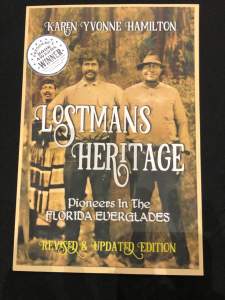
By 2018, I found myself in a position to really delve into my family history. Aunt Jane was a valuable resource of information and she taught me so much about the ins and outs of genealogy. I traveled around with my sister to Key West, Georgia, and all around Florida. We tramped through graveyards, explored cities, and sat in library and courthouse record rooms for hours. The result of that year was the book about my father’s ancestors, Lostmans Heritage: Pioneers in the Florida Everglades.
I learned to interview people as I worked on that book. In 2018, I interviewed my mother and Aunt Jane. During that interview, Aunt Jane told me that I would receive all of her years of research when she was gone. I have never felt so honored.
Aunt Jane passed away in 2021. And with that, I became the family historian. I have one whole room, called the Research Room, that houses all the artifacts of both sides of my family. Someday I suppose it will end up in the hands of whoever I designate as my ‘heir’ or in a library somewhere.
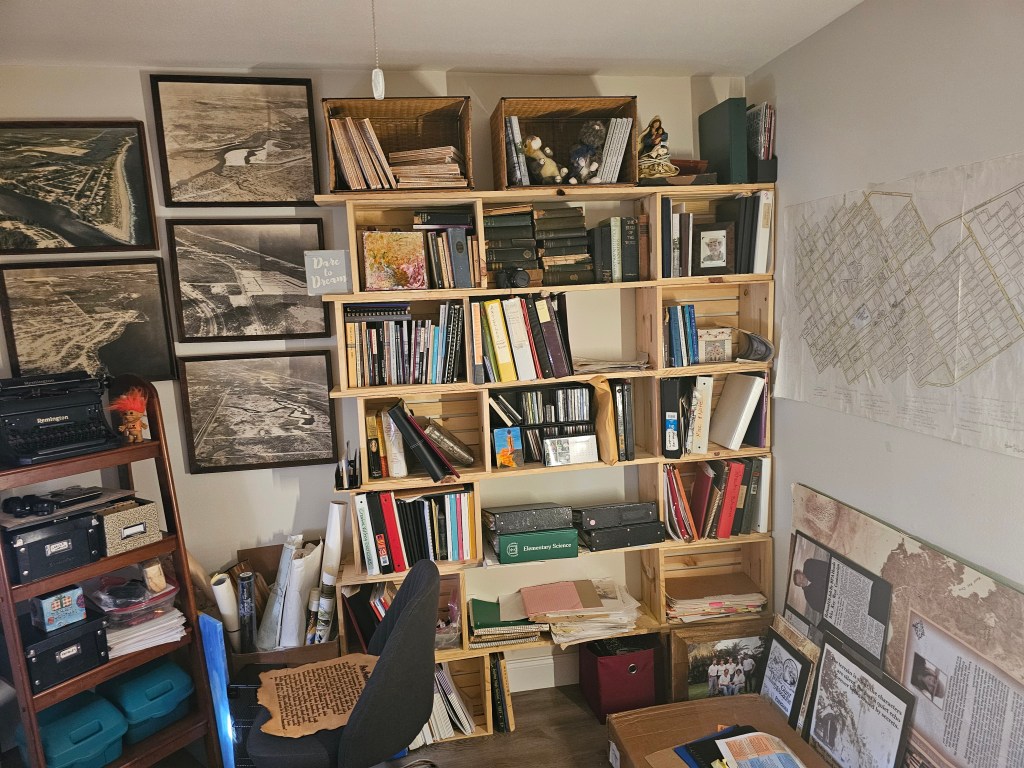
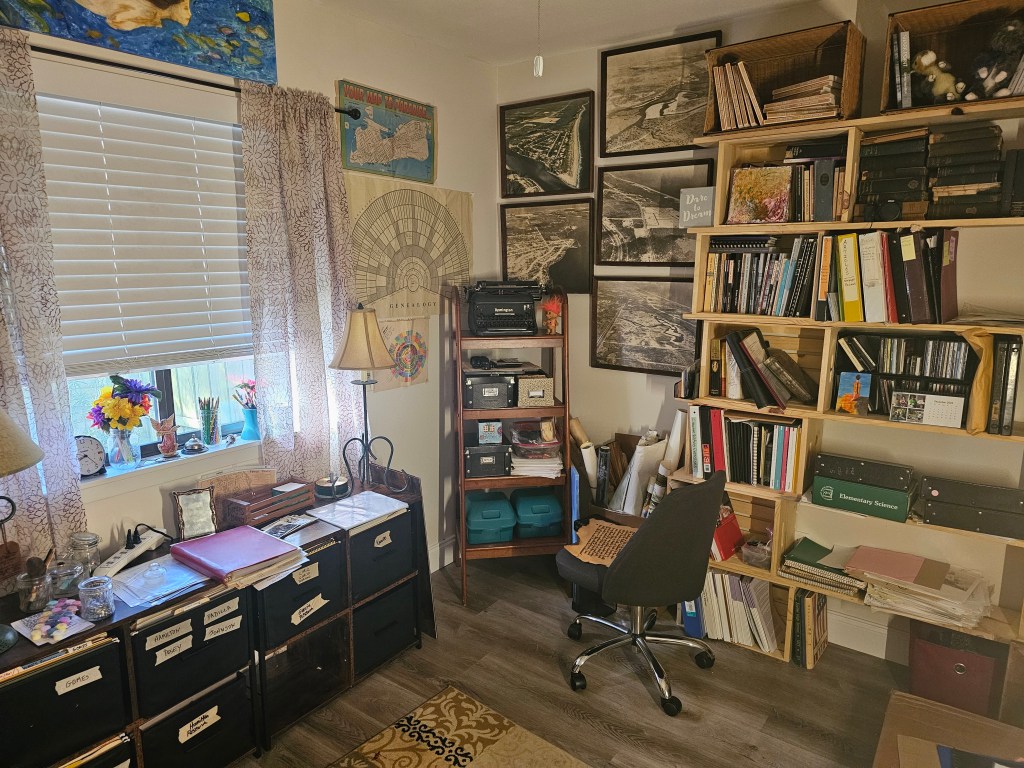
I wouldn’t have my life any other way. I live daily with the ghosts of my ancestors. I refuse to let a single one of them be forgotten.
From the memoirs of Jane Garcia Rowland:

“When I first took the plunge into this gene pool from which I emerged, I never realized just how long or how far this plunge would take me. My quest to discover my family roots has been an incredible one.
I was never very interested in genealogy. We were not a very close or clingy family. My blind Grandma (Clara Dena Knowles) had two sisters and a brother who never came to visit with her. I have often wondered about how this family on such a small island managed to avoid each other.
Actually one sister did come every Saturday morning on her way to clean, weed, and place paper roses dipped in melted wax on our family grades. I was always expected to accompany Great Aunt Lela on these missions. My aunt Lela and my grandma, Clara Dena, her sister, repeated the same ritual every Saturday.
They would start out cordial, but in a very short period of time they’d get into a debate about some trivial thing and it would escalate into a heated argument. Aunt Lela would grab my hand and depart for the lady’s home where every Saturday we would stop and buy those crepe paper roses dipped and melted wax. I got to choose the colors every week. Red was off limits because Aunt Lela felt red was not respectful for the dead. Blue was a no-no because Aunt Lela thought it wasn’t natural. So yellow, pink, lavender, and white were the colors that were usually chosen. We had no choice but to put white on Mother’s Day or any day Aunt Lela chose to be a Holy day.
I remember the Johnson lot, where my great-grandmother was buried, was near a stand of Australian pine trees. I remember thinking, with my fertile childish imagination, that as the wind blew through those pines creating a soft murmur, those trees were mourning for the dead. These graveside trips instilled in me a life-long fascination with my ancestors.
I have traveled to Florida, Georgia, Louisiana, and Mississippi, and I’ve spent a lot of hours on the phone. I’ve met and interviewed a number of people. I’ve met people who have never met me before, but because of the blood ties that bind, they took me into their homes and treated me royally and shared their family history with me. I’ve worked with the wonderful historians in the Florida Room at the Key West Library, Tom Hambright, Betty Bruce, and Sylvia Knight.
I have so many of my family to thank. I can’t even begin to list them for fear I’d miss some of them. I am so proud of my kinfolks. Most of these people (the ancestors) were God-fearing, hard-working people. Oh okay, so there were a few oddballs and rascals, but just interesting enough to keep the tree from being boring.”
Top 10 Tips for Starting Your Family History from the Society of Genealogists
5 Things Every Family Historian Should Be Doing Now
 Exploring Florida History