Karen Yvonne Hamilton, 2026
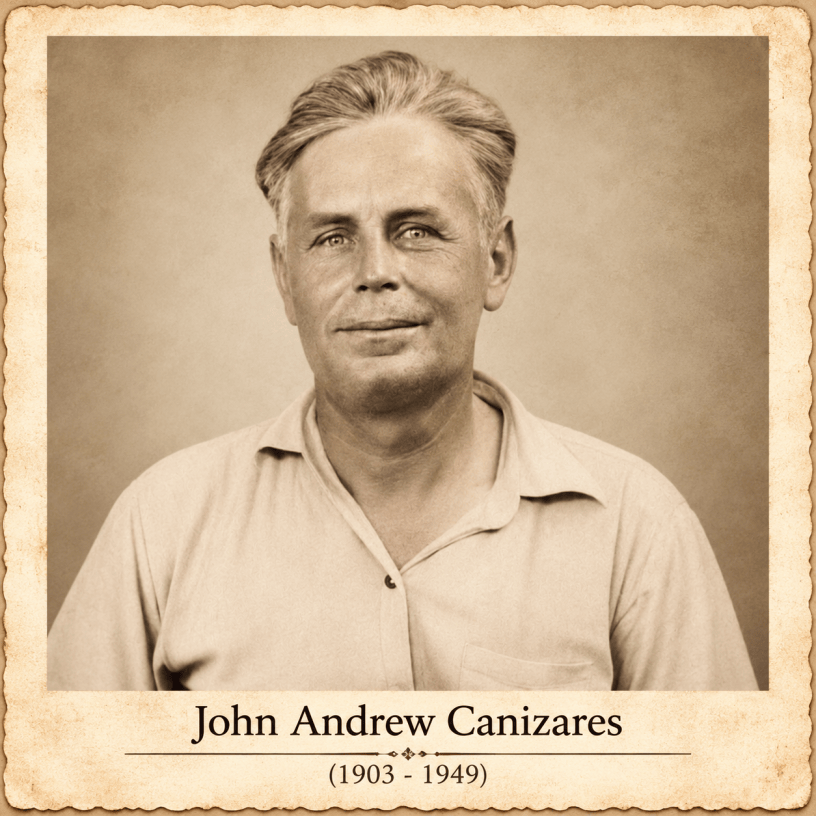
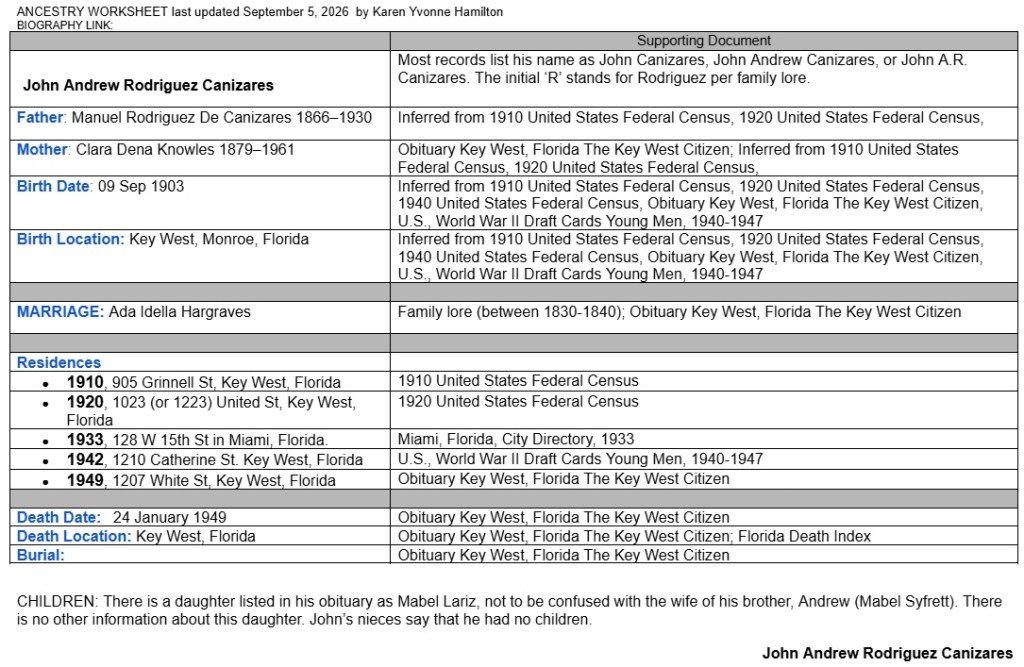
John Andrew Canizares belonged to a generation of Key West men whose lives were tied closely to the water, the land, and the extended family that surrounded them. To official records he appears under several variations of his name—John Andrew Canizares, John A. Canizares, and, later in life, John Antonio Canizares. To the younger members of his family, however, he was simply Uncle John, the uncle with the crutch, the animals, the fishing stories, and a seemingly endless supply of bedtime tales.
EARLY LIFE
John was born September 9, 1903, in Key West, Florida, the son of Clara Dena Knowles and her second husband, Manuel Rodriguez de Canizares. His mother’s complicated family history would give John a household filled with siblings and half-siblings and would also help explain the different surnames that appear in records over the years.
By 1910, seven-year-old John was living with his parents and siblings at 905 Grinnell Street in Key West. A decade later, the family structure had changed. Clara had married Manuel Lariz, and the 1920 census placed John in the Lariz household on United Street. Living there were John, his siblings Manolo and Anna Maria, and his younger half-siblings Clara Bell and Andrew “Bubby” Lariz. The census records preserve a picture of the blended household in which John came of age.
The family’s Spanish naming traditions occasionally complicated the official record. John’s niece, Jane Garcia Rowland, later explained that John chose to use the surname Canizares, while two of his siblings used Rodriguez. Because Spanish custom often incorporated both paternal and maternal surnames, names and legal signatures did not always appear consistently in American records. John’s last driver’s license identified him as John Antonio Canizares, the name by which he apparently preferred to be known.
MARRIAGE
Sometime during the 1930s John married Ada Idella Hargraves. The couple apparently had no children of their own, although John would become an important figure in the lives of his nieces and other young relatives.
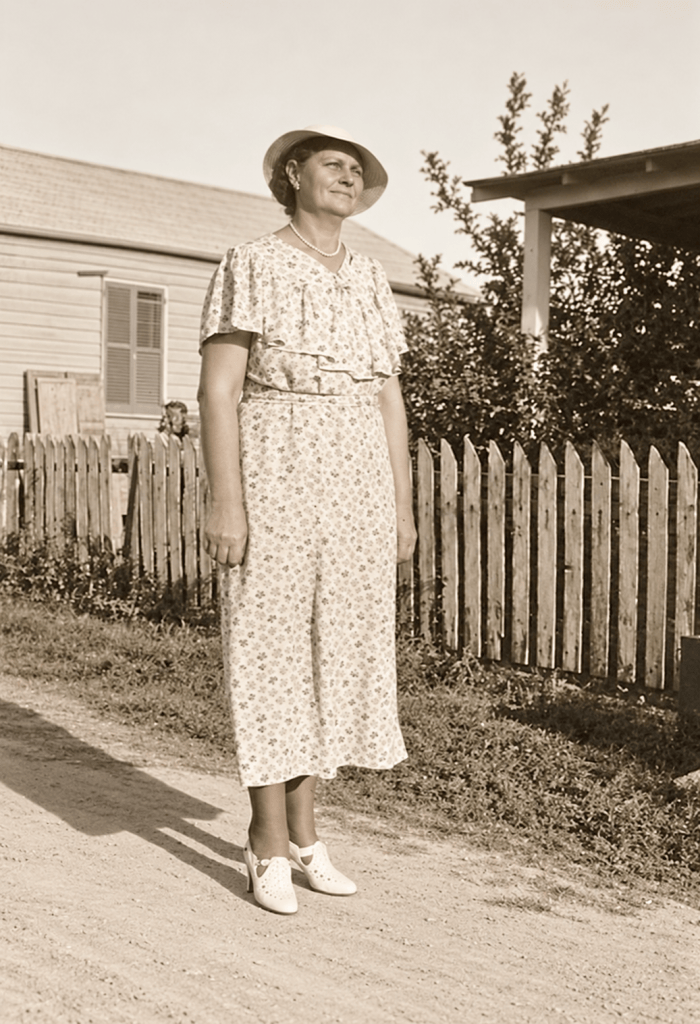
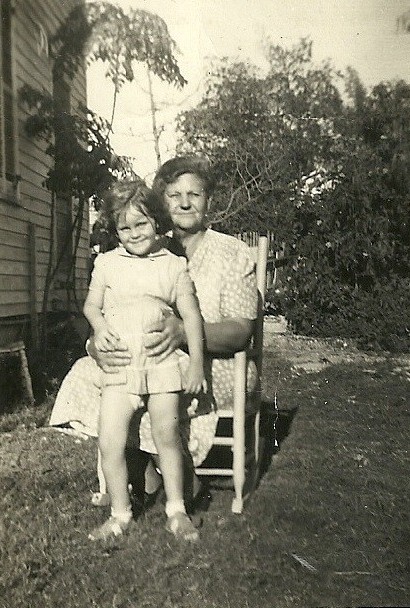
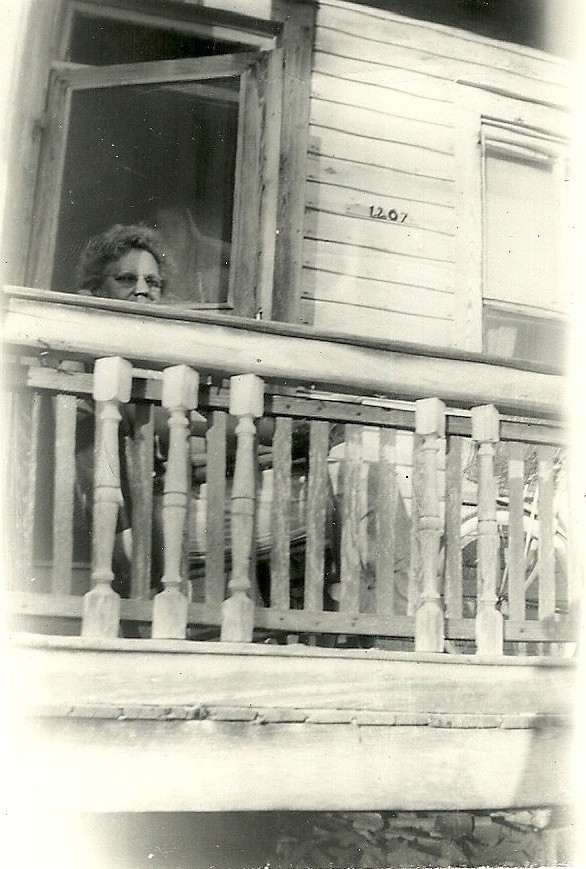
For at least part of the Depression years, John and Ada left Key West. The 1933 Miami City Directory shows them living at 128 West 15th Street in Miami, where John was employed in the cigar trade. His occupation is recorded as a cigar manufacturer, connecting him with an industry that had played an enormous role in the economic and cultural history of Key West before spreading elsewhere in Florida.
By 1940, John and Ada had returned to Key West. They were living at 1019 Watson Street in a household that included John’s half-brother Andrew Lariz, Andrew’s wife Mabel, and their daughter Clara Idella. John and Bubby were both working in construction at the time.
Two years later, America’s involvement in the Second World War brought another official record of John’s life. He registered for the draft on February 14, 1942, at the Monroe County Local Board in Key West. He gave his home address as 1210 Catherine Street and his birthplace as Key West. He was thirty-eight years old. The registrar described him as approximately five feet seven inches tall and 168 pounds, with gray eyes, gray hair, and a ruddy complexion.
Most strikingly, the draft card recorded something family members would remember throughout his life: a physical disability affecting his left hand. The registrar noted that “Half of third finger of first joint gone on left hand.” Family memories recall that he often walked with a cane or crutch.
Yet the disability seems to have done remarkably little to confine him.
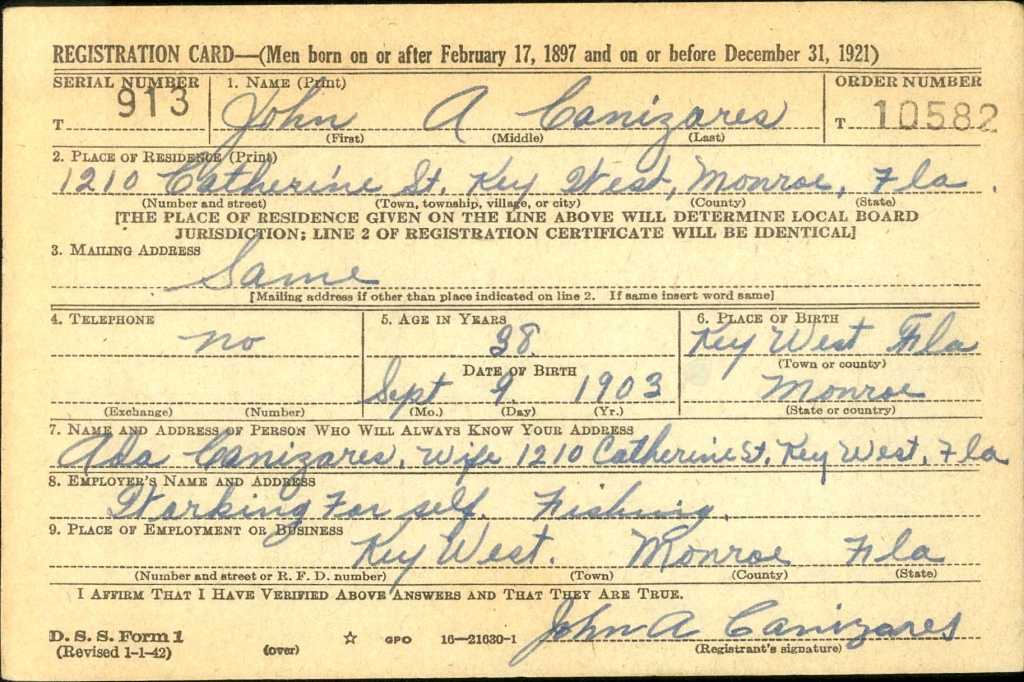
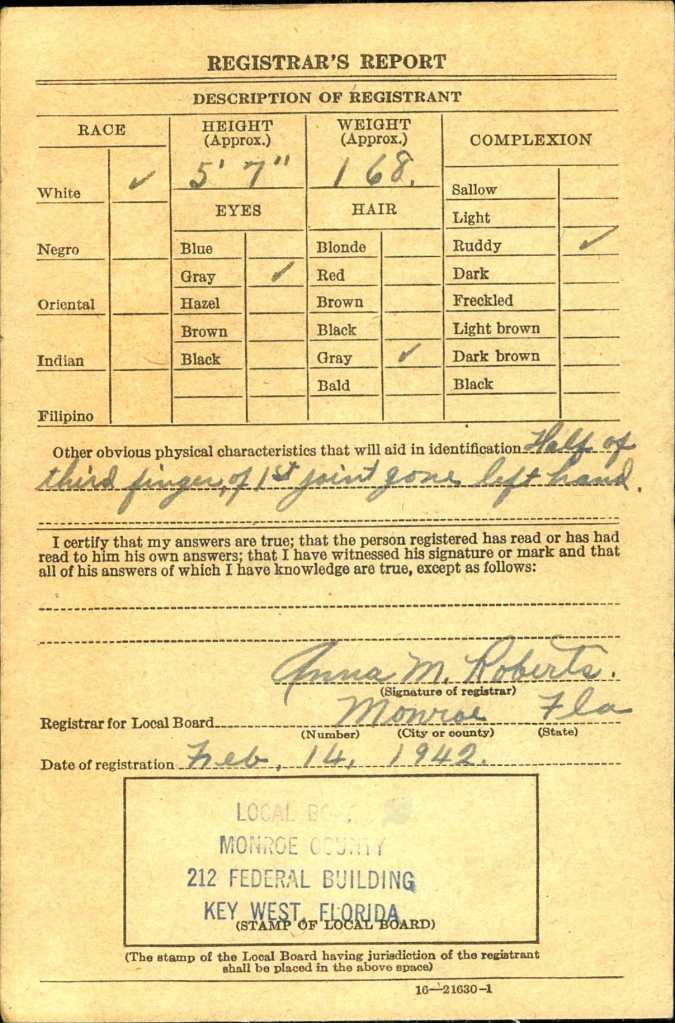
John eventually lived for periods on Big Pine Key and Big Coppitt Key, at a time when the Lower Keys were far less developed than they would become in later decades. Jane Garcia Rowland remembered Big Pine as so sparsely settled that the children could play in the gravel road in front of John’s house. The freedom came with one warning: they were always expected to watch carefully for rattlesnakes.
John made a life there that would have been familiar to earlier generations of Keys residents. He grew collard greens, peppers, and tomatoes and kept chickens, pigs, and goats. He fished, caught crabs and crawfish—Florida lobster—and hunted raccoons. His physical limitations apparently did little to interfere with any of it.
The children adored visiting him.
They gathered eggs from his chickens and sometimes ate fried eggs for breakfast. They played with piglets and gave names to the goats. Two favorites were remembered as Blackie and Snowball, although another family photograph identifies one goat as Billy and preserves slightly different versions of the animals’ names. Whatever their names, the children became attached to them. When slaughter time came, they were horrified and refused to eat their former playmates.
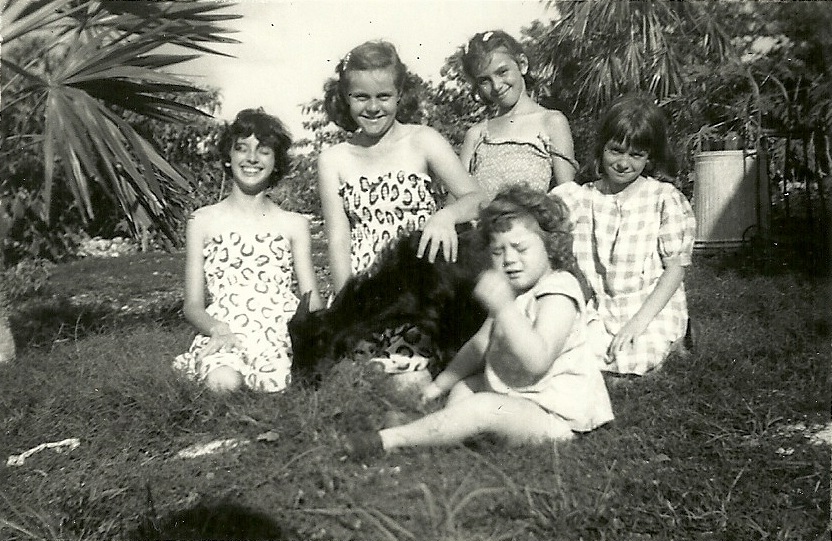
Fishing provided happier memories. John brought home grunts and yellowtail, caught crabs, and went out at night with Bubby for crawfish. Jane remembered Florida lobster cooked for breakfast with onions and diced potatoes as a special treat.
John also had an adventurous streak. One family story placed him at the Blue Hole on Big Pine Key, hunting raccoons. Then, as now, the freshwater quarry was a haunt of alligators. According to John, one large alligator surprised him and struck him with its powerful tail. John went flying in one direction. His crutch went flying in another. Exactly how he escaped was lost from Jane’s memory, but Uncle John survived—and naturally acquired another story to tell.
STORYTELLER
And storytelling may have been John’s greatest gift.
Jane remembered him as somewhat reclusive around adults, but he became someone entirely different when surrounded by children. At bedtime they waited eagerly for him to begin. She recalled that he knew the Uncle Wiggily stories by heart, though in another recollection she affectionately remembered them as “Tales of Piggly Wiggly.” John did not merely recite the stories. He performed them, creating different voices and accents and adding enough suspense and drama to keep the children completely captivated. “We couldn’t wait for bedtime,” Jane remembered.
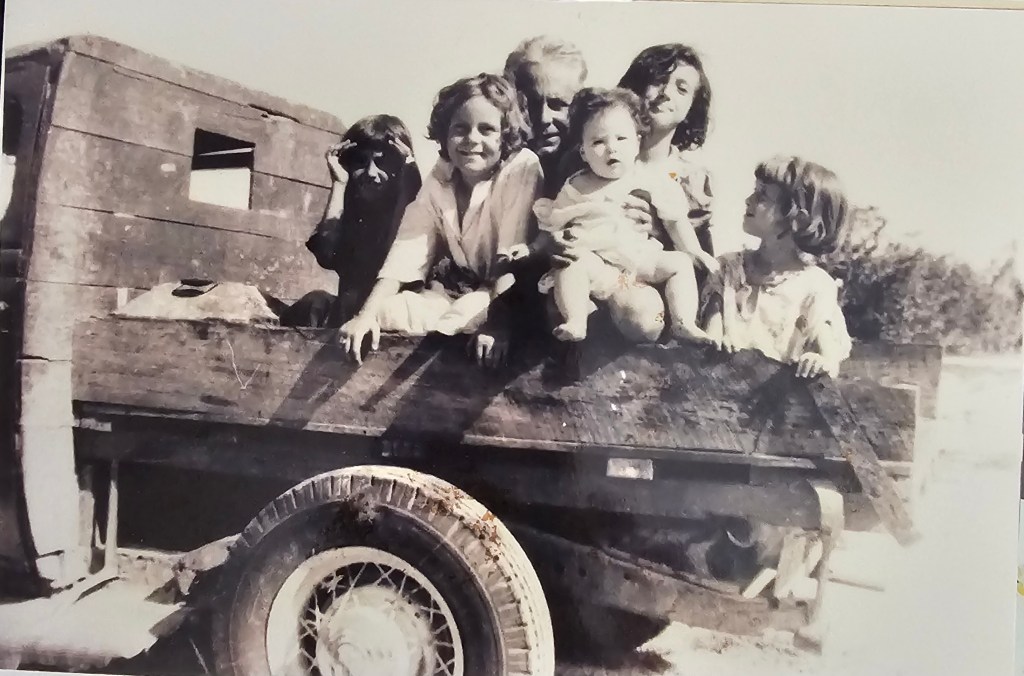
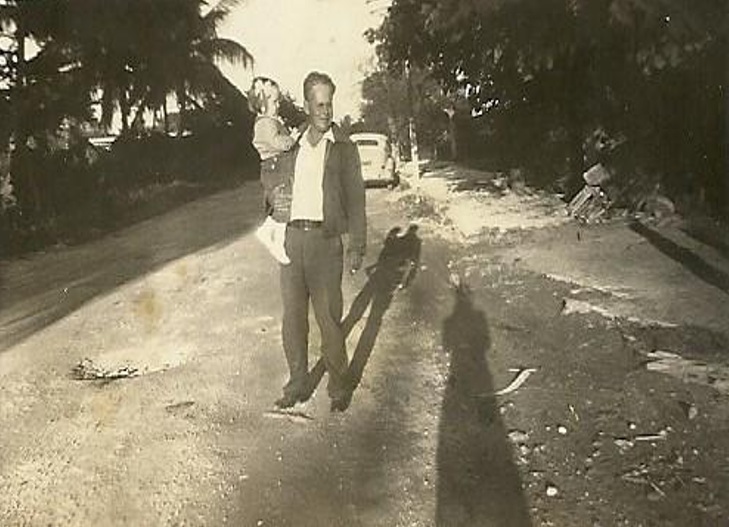
For a man who never had children of his own, Uncle John left an unusually strong impression on the children around him. The surviving family photographs reflect that closeness. One shows him among family members at Big Coppitt Key; another shows Uncle John carrying young niece, Clara Idella, surrounded by the rough road, vegetation, and scattered homes of the Keys before modern development transformed them.
DEATH
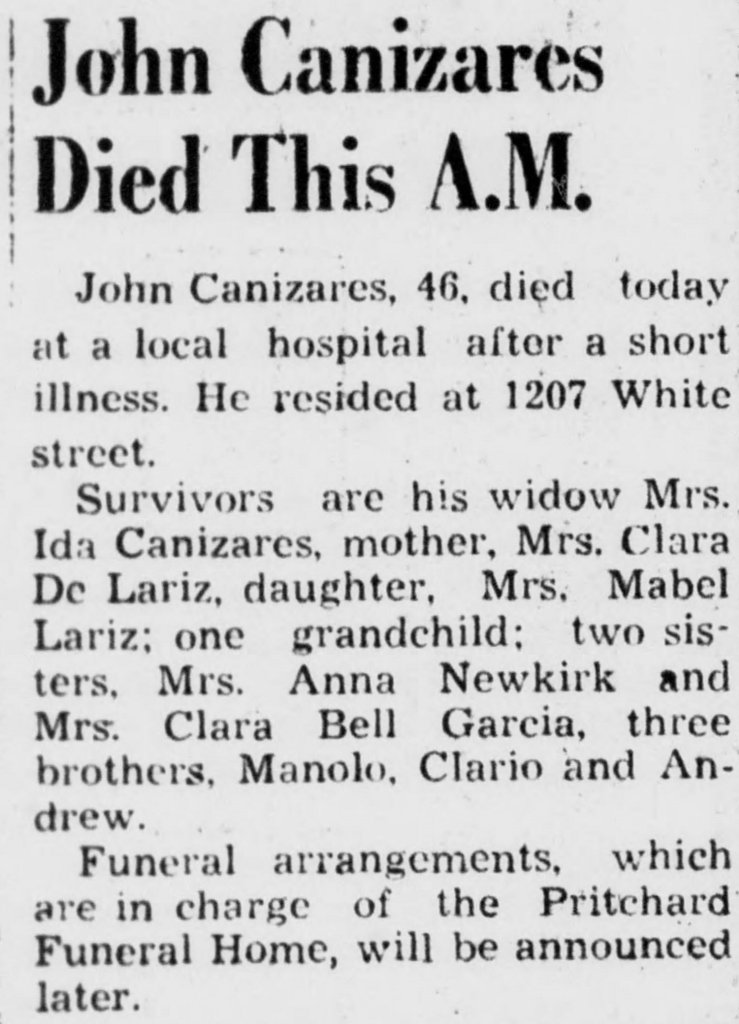
John’s life ended unexpectedly while he was still relatively young. On January 24, 1949, The Key West Citizen announced simply:
“John Canizares Died This A.M.”
The newspaper reported that the forty-six-year-old had died at a local hospital following a short illness. At the time he was living at 1207 White Street. His widow was identified as Mrs. Ida Canizares, and the survivors included his mother, Mrs. Clara De Lariz, along with members of the Lariz, Newkirk, Garcia, and Canizares families. Funeral arrangements were handled by Pritchard Funeral Home.
Family recollection adds a more personal detail to the bare newspaper notice. Jane wrote that her Uncle John died of a heart attack. Not long before his death, he had apparently become uneasy about remaining alone on the Keys and had come back toward Key West.
He was only forty-six.
Official documents leave behind the usual fragments of a man’s existence: a birth date, census addresses, occupations, a marriage, a draft registration, and a death notice. But John Canizares is fortunate in another respect. His family remembered the things government records never asked about.
They remembered the chickens and piglets. They remembered Blackie and Snowball. They remembered crawfish fried with onions and potatoes. They remembered watching for rattlesnakes along a gravel road on Big Pine Key. They remembered the uncle who managed to hunt, garden, fish, and crab despite needing a crutch—and the day an alligator sent both the man and the crutch flying.
Most of all, they remembered bedtime. Uncle John would settle in, the children would gather around, and another adventure would begin. He changed his voice for each character and stretched out the exciting parts until his young audience could hardly stand the suspense.
Long after his house, his gardens, and the sparsely populated Keys he knew had changed, those stories remained. That may be the most fitting legacy for John Canizares: a man who left no children of his own, but who became unforgettable to a generation of children who were lucky enough to call him Uncle John.
Read more biographies here.
SOURCES
Memoirs of Jane Garcia Rowland and Josephine Garcia Simmons
FLORIDA KEYS HISTORY FACEBOOK GROUP: Consider joining our group for more on Florida Keys History.
FLORIDA EVERGLADES HISTORY FACEBOOK GROUP: Consider joining our group for more on Florida Everglades History.