by Karen Yvonne Hamilton, 2024
Hannah Elizabeth Knowles was born in Key West, Florida, on October 10, 1869, into a family whose roots reached back across the waters to the Bahamas. Her father, Justin Everett Knowles, and her mother, Jane Ann Hopkins, were both twenty-two years old when Hannah was born. Hannah’s death certificate later recorded that both of her parents had been born in the Bahamas, placing her firmly within the Bahamian-American community that helped shape nineteenth-century Key West. In fact though, Justin Everett was born in the Bahamas, but Jane Ann was born in Georgia.
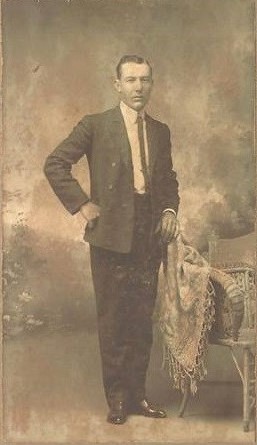
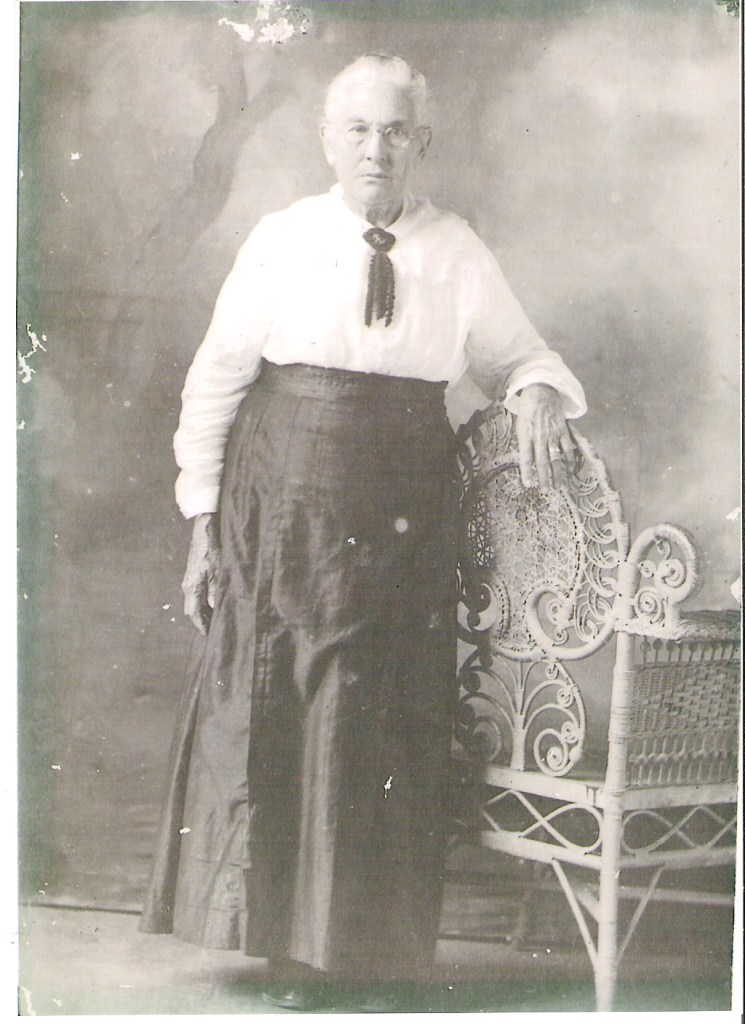
Hannah grew up in a Key West that would have been very different from the island known today. The town was busy with ships, fishing boats, cigar factories, wrecking vessels, and families whose lives were closely tied to the sea. Bahamian customs and family connections were woven into everyday life. Houses were filled with extended family, neighbors knew one another’s business, and children learned early that survival depended upon work.

At only sixteen years old, she married Thomas William Brady in Monroe County on April 15, 1886. Their marriage produced a daughter, Vivian Golden Brady. Whatever circumstances eventually ended that marriage are not explained in the surviving family material, but Hannah’s life soon began another chapter.
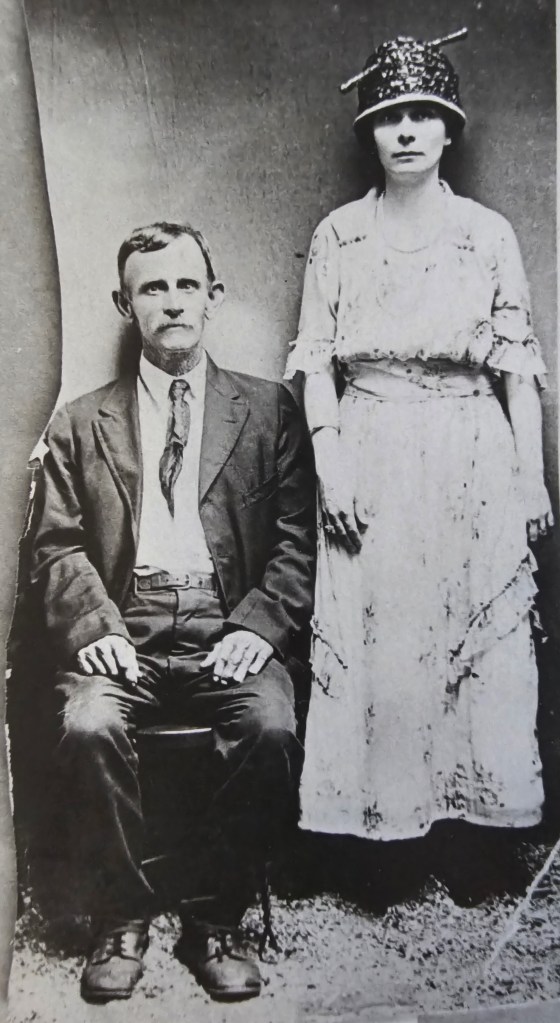
On October 27, 1890, twenty-one-year-old Hannah married Arthur O. Griffin in Key West. Their marriage would last more than four decades, until Arthur’s death on December 12, 1933. Together, they raised a large family. By the time Hannah died, her obituary named two daughters and four sons among her surviving children, along with siblings, grandchildren, and great-grandchildren—a reminder of how large the family circle had become around the quiet young woman born in Key West in 1869.
One of Hannah and Arthur’s daughters was Ivadell Griffin, born November 6, 1896. Ivadell would grow into a very different personality from her mother.
Family memories describe Hannah as subdued, quiet, and kindhearted. She belonged to the Church of God and was remembered as a hardworking woman. She was said to be almost the complete opposite of her sister Clara Dena, whose personality was considerably livelier. Yet Hannah’s gentleness should not be mistaken for weakness. Her life required endurance. Family recollections say that Arthur drank heavily and that Hannah worked hard throughout their marriage.
Her home eventually stood at 1213 Knowles Lane, an address that appears both in the family’s recollections and on her death certificate. There Hannah carried on the ordinary work that held households together—cooking, sewing, caring for family, and managing whatever hardships arrived at her door.
Then, as she grew older, Hannah lost her sight. Family tradition suggests that both Hannah and her sister Clara Dena became blind, possibly because of cataracts. Surgery may have restored their vision, but the family reportedly could not afford it. For a woman whose days had been filled with practical work, blindness might have seemed devastating.
Hannah adapted. She continued to cook. She continued to sew. That small detail may say more about her character than a long list of dates ever could. Hannah knew the rooms of her house, the placement of the furniture, the feel of fabric beneath her fingers, and the movements necessary to prepare the meals she had made countless times before. Eyesight failed her, but memory and determination did not.
Jane GARCIA Rowland notes: “Hannah Griffin belonged to the Church of God. Complete opposite of her sister, Clara Dena. Hannah was very subdued, quiet, kind hearted. Boys around her all the time. Towards the end of her life, she lived on Knowles Lane and she was a very hard worker. She went blind when she was older. She still cooked and sewed.” Her sister, Clara Dena also went blind, possibly from cataracts and they could not afford the surgery.
And around Hannah, the next generation was anything but quiet.
Her daughter Ivadell became particularly close to Hannah’s younger sister Clara Dena Knowles. Although Clara was technically Ivadell’s aunt, the two were remembered as best friends. Family lore portrays them as spirited young women who enjoyed drinking, dancing, and playing cards—a considerable contrast to Hannah’s subdued personality.
The family stories surrounding Ivadell preserve an especially vivid glimpse of childhood in old Key West.
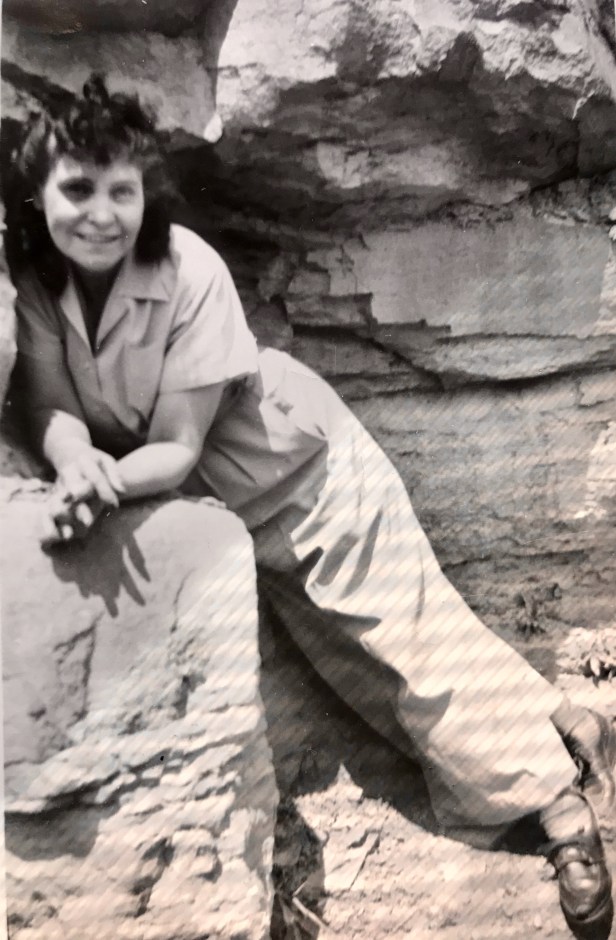
According to memories recorded by Lucille Knowles Hargar, she and Ivadell were once partners in mischief. The girls skipped school and wandered toward the beach, which at the time was largely uncleared land—”wild country,” as older Key Westers remembered it. They went in search of ripe prickly pears, the fruit of the cactus growing there.
Their adventure presented a problem when they returned home. It was too early. Anyone seeing them would know they had not been in school. The girls spotted a large laundry basket and decided that hiding beneath it offered the perfect solution. They crawled underneath and waited.
Then Hannah entered the room. Unaware that two guilty girls were crouched beneath the basket, she began visiting with a neighbor—and sat down on it. Lucille later recalled that she and Ivadell were terrified not merely of being discovered but that the basket might collapse and squash them. Eventually their hiding place was uncovered. The adventure ended with a switching across their legs. It was apparently not their only one.
Lucille remembered the children chasing the neighborhood ice truck. Before electric refrigerators became common, large cakes of ice were delivered to homes. The iceman carried slabs in a wooden-bed truck and used ice tongs and an ice pick to cut whatever size a household ordered. For children, the treasure was the small chips left behind.
Ivadell and her companions would run behind the moving truck, pull themselves onto the tailgate, and steal pieces of ice. In tropical Key West, a cold chip of ice on a hot day must have seemed worth the risk. Once again, there were switchings when the adults discovered what they had been doing.
These family recollections, preserved in research notes by Clara Dena’s granddaughter, Jane Ann Garcia Rowland and transcribed in 2022, transform Ivadell from a name on a family tree into a mischievous Key West girl racing barefoot or nearly so through an island town after an ice wagon.
Behind such stories stood Hannah—the quiet mother trying to keep order.
By the early 1940s, Hannah had lived nearly three-quarters of a century in Key West. She had witnessed enormous changes: the decline of the wrecking era, the rise and fall of cigar manufacturing, hurricanes, economic hardship, automobiles replacing horses and wagons, electricity arriving in homes, and the transformation of the isolated island of her childhood.
She had also endured personal losses. Arthur, her husband of forty-three years, died in 1933. Hannah lived another ten years as his widow.
On April 22, 1943, at approximately one o’clock in the morning, Hannah Elizabeth Knowles Griffin died at her home at 1213 Knowles Lane. She was seventy-three years, five months, and twenty-nine days old.
Her Florida death certificate gives the immediate cause as congestive heart failure, due to chronic myocarditis. It identifies her occupation simply as housewife, an understated description for the decades of labor required to raise and maintain a large family. She was buried in Key West on April 25, 1943.
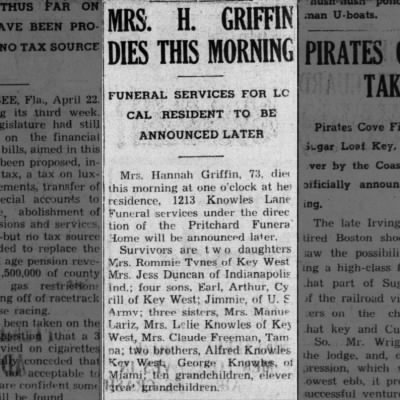
Her obituary reported that her children, siblings, grandchildren, and great-grandchildren survived her—a family extending far beyond the small household into which she had been born in 1869.

SOURCES
ANCESTRY WORKSHEET last updated October 11, 2026 by Karen Yvonne Hamilton
| Supporting Document | |
| Hannah Elizabeth Knowles | |
| Father: Justin Everett Knowles | Vital Statistics State of Florida. Death Certificate for Hannah Griffin. State File No. 8131. |
| Mother: Jane Ann Hopkins | Vital Statistics State of Florida. Death Certificate for Hannah Griffin. State File No. 8131. |
| Birth Date: October 10, 1869 Monroe County, Key West, Florida | Vital Statistics State of Florida. Death Certificate for Hannah Griffin. State File No. 8131. |
| MARRIAGE: Thomas William Brady April 15, 1886 Monroe County, Key West, Florida | Florida, County Marriage Records, 1823-1982 |
| Children: Vivian Golden Brady | |
| MARRIAGE: Arthur O. Griffin October 27, 1890 Monroe County, Key West, Florida | Vital Statistics State of Florida. Death Certificate for Hannah Griffin. State File No. 8131. |
| Children: Earl Griffin 1892–1970; Arthur L Griffin 1894–1975; Ivadell Griffin; 1896–1979; Victor Griffin 1899–1949; Cyril Beliss Griffin 1902–1972; James Griffin 1905–1985 | Inferred from Census Records. Family lore. U.S., World War II Draft Cards Young Men, 1940-1947 (James Griffin. Hannah listed as his mother.) |
| Residences | |
| (1880) 444 Frances Street, Key West, Monroe, Florida | 1880 United States Federal Census |
| (1885) Watson Street, Key West, Monroe, Florida | 1885 United States Federal Census |
| (1900) 1112 Watson Street, Key West, Monroe, Florida | 1900 United States Federal Census |
| (1906) 811 Francis, Key West, Monroe, Florida | Key West, Florida, City Directory, 1906 |
| (1910) 1213 United Street, Key West, Monroe, Florida | 1910 United States Federal Census |
| (1920) 1213 United Street, Key West, Monroe, Florida | 1920 United States Federal Census |
| (1930) 1213 Knowles Lane, Key West, Monroe, Florida | 1930 United States Federal Census |
| (1940) 1213 Knowles Lane, Key West, Monroe, Florida | U.S., World War II Draft Cards Young Men, 1940-1947 (James Griffin). Hannah listed as his mother. |
| (1943) 1213 Knowles Lane | Vital Statistics State of Florida. Death Certificate for Hannah Griffin. State File No. 8131. |
| Death Date: April 22, 1943 Monroe County, Key West, Florida | Vital Statistics State of Florida. Death Certificate for Hannah Griffin. State File No. 8131.; The Key West Citizen. 24 Apr 1943. |
| Burial: April 25, 1943 Monroe County, Key West, Florida | The Key West Citizen. 24 Apr 1943. |
FLORIDA KEYS HISTORY FACEBOOK GROUP: Consider joining our group for more on Florida Keys History.
FLORIDA EVERGLADES HISTORY FACEBOOK GROUP: Consider joining our group for more on Florida Everglades History.
Read more Key West biographies in Crossings: A History of the Knowles, Lariz, Garcia Family