
Jane Ann Hopkins and the Summer of 1865
On May 11, 1865, eighteen-year-old Jane Ann Hopkins married in Key West. Three months later, both of her parents were dead.
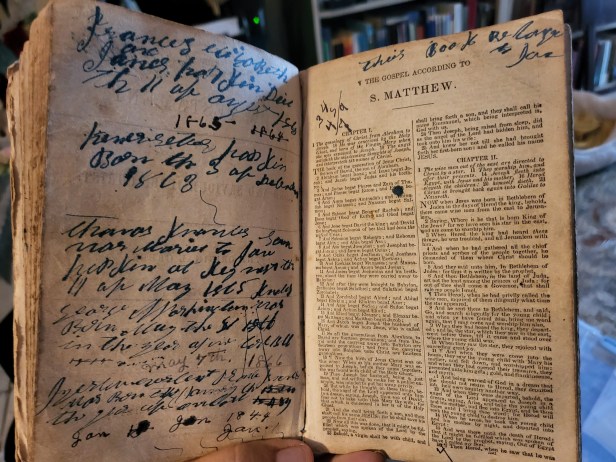
In the family Bible preserved by their descendants, one entry records the loss that changed the Hopkins family: “Frances Elizabeth and James Hopkins died the 11th August 1865.”
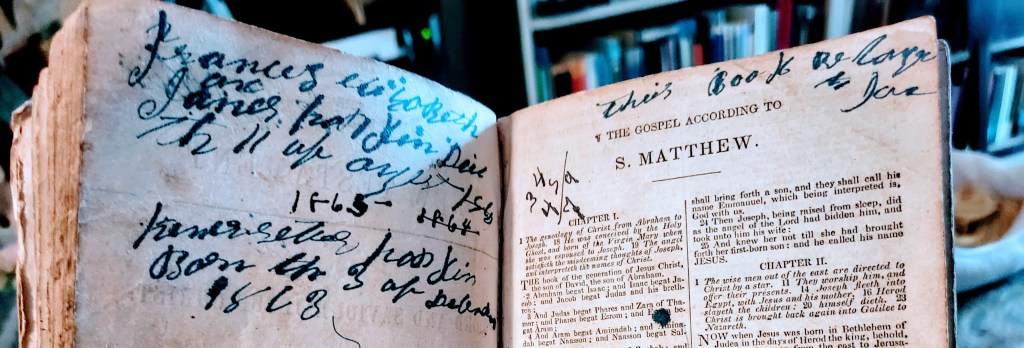
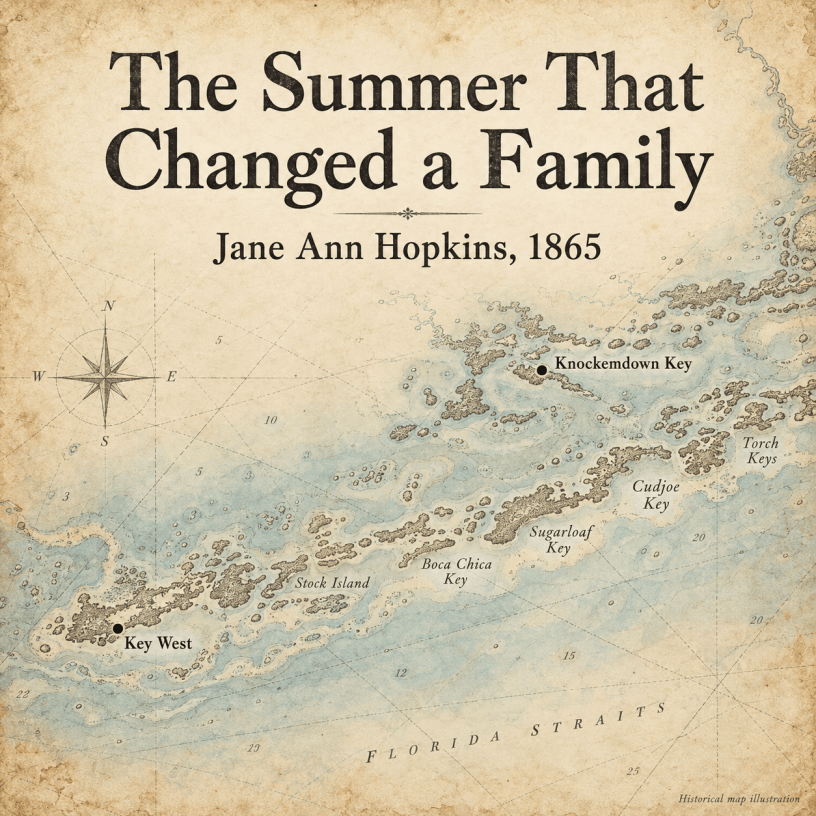
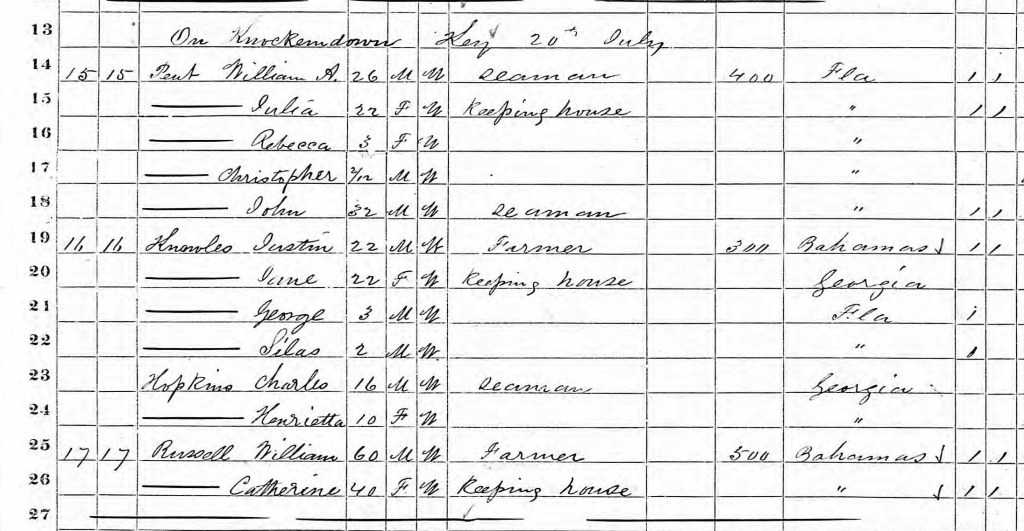
They died on Knockemdown Key, leaving five children, including a seventeen-year-old daughter who had married only three months earlier. For Jane Ann Hopkins Knowles and her husband, Justin Everett Knowles, the beginning of married life became a time of bereavement and responsibility for younger family members.
James Hopkins was born in Georgia about 1828; Frances Elizabeth, whose surname appears as Harriede, Harrard, Harrod, and other variants, was born about 1832. Florida marriage records place their marriage in Leon County, Florida, on September 27, 1850. Jane Ann, identified in the family accounts as their eldest child, had been born on September 18, 1847. Census records infer Jane’s birth year to be abt 1847 or 1848. Her death certificate and obituary say 1840. She was 3 on the 1850 census, which would back up birth year to be 1847.
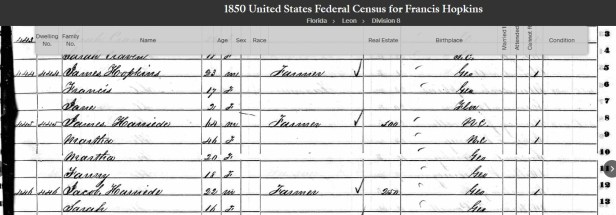
James and Frances are placed in Leon County in the 1850 census, near households bearing Frances’s surname. Those neighbors may have been relatives, but the relationship remains unproven.
By 1860, the family was back in Georgia. The census citation identifies Miller County, sometimes referred to as Colquitt County. James was a farmer whose recorded real estate was valued at $350 and personal estate at $150.
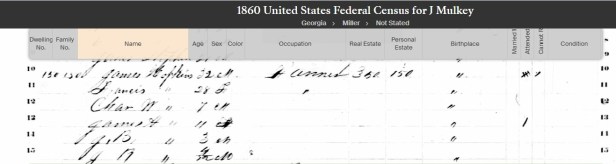
Four younger children joined Jane: Charles W., born about 1854; James Berrian, born November 1, 1857; John Simon, born January 14, 1859; and Henrietta, known as Rita, born December 3, 1863. Their surviving records trace a family moving between Georgia and Florida before settling in the Keys.


The date and reason for that final move are uncertain. Family tradition says James and Frances sought to escape yellow fever elsewhere, while Jane’s biography suggests that the Civil War may have influenced their departure. Civil War Soldier Records show that James Hopkins enlisted and served as a private for the Union Army from February 1864 to January 1865. He mustered out in Chicago. No record shows where he went out after leaving the army.
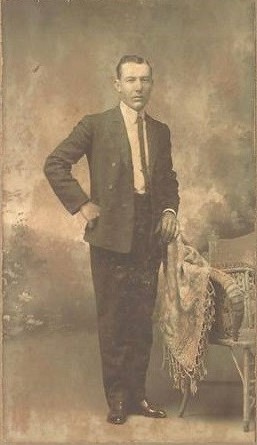
By May 1865, however, Jane was in Key West. There she married Justin Everett Knowles on May 11. Family records identify Justin as Bahamian-born, from Long Island, and the son of John Thomas Knowles and Hannah Elizabeth Prance.
Yellow fever in the summer of 1865
Their wedding came in a year when the end of the Civil War brought no end to the danger of epidemic disease. According to the Florida Keys History Center, the Adventure reached Key West on June 19, 1865, with four crew members suffering from yellow fever. They were sent to the Marine Hospital. The ensuing outbreak affected Army personnel and civilians; the history center reports 331 cases and 71 deaths among troops, with the civilian case total unknown.[1]
These figures show that yellow fever was a substantial local threat during the months between Jane’s wedding and her parents’ deaths.
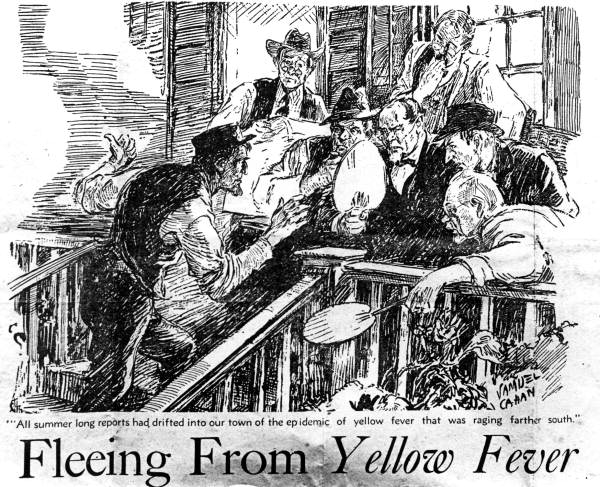
The disease also exposed the limits of nineteenth-century understanding. People had not yet established the mosquito’s role in transmitting yellow fever. Quarantines and attempts to eliminate supposedly contaminated possessions could therefore fail to address the actual means of infection. Modern knowledge identifies infected mosquitoes, particularly Aedes aegypti in the urban transmission cycle, as the agents carrying the virus between people.[2]
For island households, separation from a crowded port did not necessarily mean protection. Boat travel connected settlements with supplies, work, and other families. Movement of infected people or mosquitoes could make transmission possible where suitable mosquitoes were present.
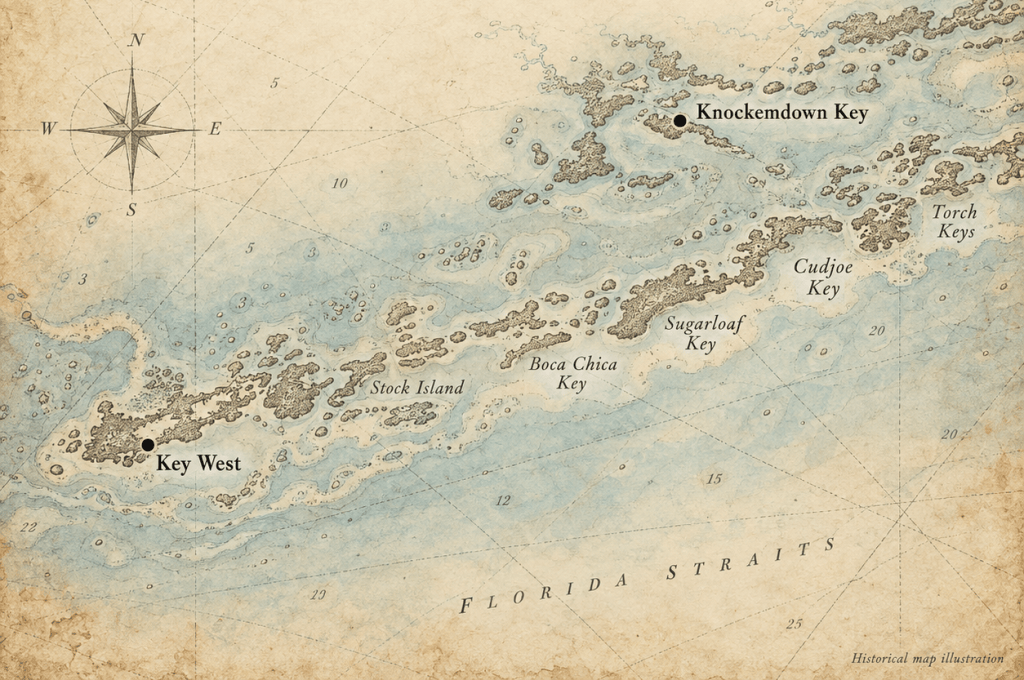
That is a plausible explanation for exposure on an outlying key, rather than a documented account of how the Hopkins household became ill. Mangrove mosquitoes alone are not evidence of yellow fever transmission; Aedes aegypti commonly breeds in water-holding containers near people.[3]
Two deaths and a household changed
On August 11, 1865, James and Frances died on Knockemdown Key. Based on the birth years given in their biographies, James was about thirty-seven and Frances about thirty-three. The Bible entry establishes the shared date; it does not name their illness.
Family tradition supplies the explanation of yellow fever. Their deaths during the documented summer outbreak, together with the loss of both parents on the same day, make that explanation plausible. The strongest responsible conclusion is that James and Frances may have died of yellow fever. Without a medical account, burial entry naming the disease, or another contemporary record, their cause of death remains unconfirmed. Nor do the supplied documents establish who attended them or whether they received medical care.
Jane had not yet reached her eighteenth birthday. Her younger siblings were approximately eleven, seven, six, and twenty months old. Those ages, calculated from the listed birth dates, make clear the practical consequences of losing both parents: several children still needed years of care.
Jane and Justin brought at least Charles and Henrietta into their household. The 1870 census places both with the couple on the Keys east of Key West. This supports the family account that Jane and Justin raised them, although it does not establish the precise date they arrived or prove a formal legal adoption. James Berrian and John Simon may also have spent time in their care, but the supplied evidence does not establish that arrangement.
Records indicate that John Simon was subsequently raised by John William Frow and wife, Adelaide Stirrup. The 1870 Dade County, Florida census lists a boy, John, born in Georgia, age 9 living with John and Adelaide Frow.
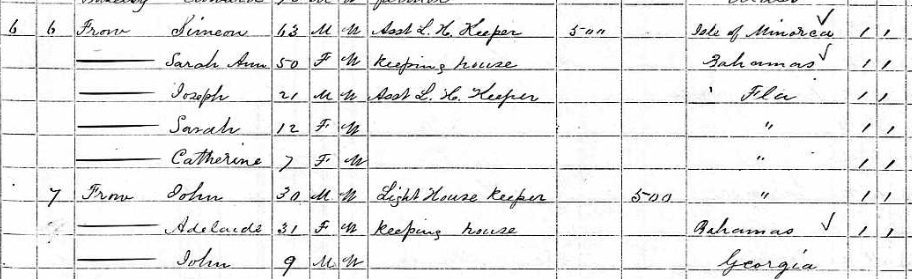
Throughout his life, he used the name John Simon Frow, although many records include his birth surname of Hopkins.
One family letter reportedly says that little Rita died of yellow fever with her parents. Her appearance in the Knowles household in 1870 contradicts that account, assuming the census identification is correct. It is a significant example of why inherited stories must be compared with surviving records: the memory of a devastating loss appears to have included a child who survived.
Another child entered Jane and Justin’s care the following year. Justin’s mother, Hannah Elizabeth Prance Knowles, reportedly died twenty days after giving birth to George Washington Knowles on May 7, 1866. George was Justin’s younger brother. Jane and Justin raised him, and he appears in their household in 1870. The timing of Hannah’s death suggests a possible childbirth-related cause, but the supplied records do not confirm it.
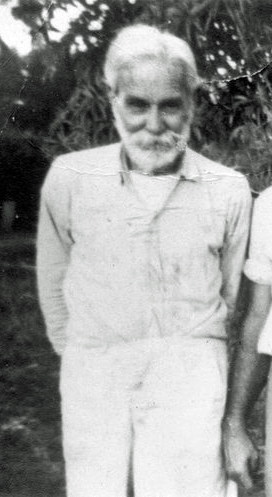
Within little more than a year of their marriage, Jane and Justin had become caregivers to children from both sides of the family. Calling these arrangements adoption conveys the family’s understanding of their role; “took in and raised” describes more precisely what the available evidence supports.
The family Jane carried forward
Their household continued to grow. Alongside George, whom they raised, their children included Silas Everett, Hannah Elizabeth, James Everett, Clara Dena, Alphred or Alfred “Tukie” Pillage, Leonora “Lela,” and Belle Corrine. Later records follow the family into Key West, where maritime work and the cigar industry helped sustain them. Justin was recorded as a sponger in 1900, while several family members worked in cigar production.
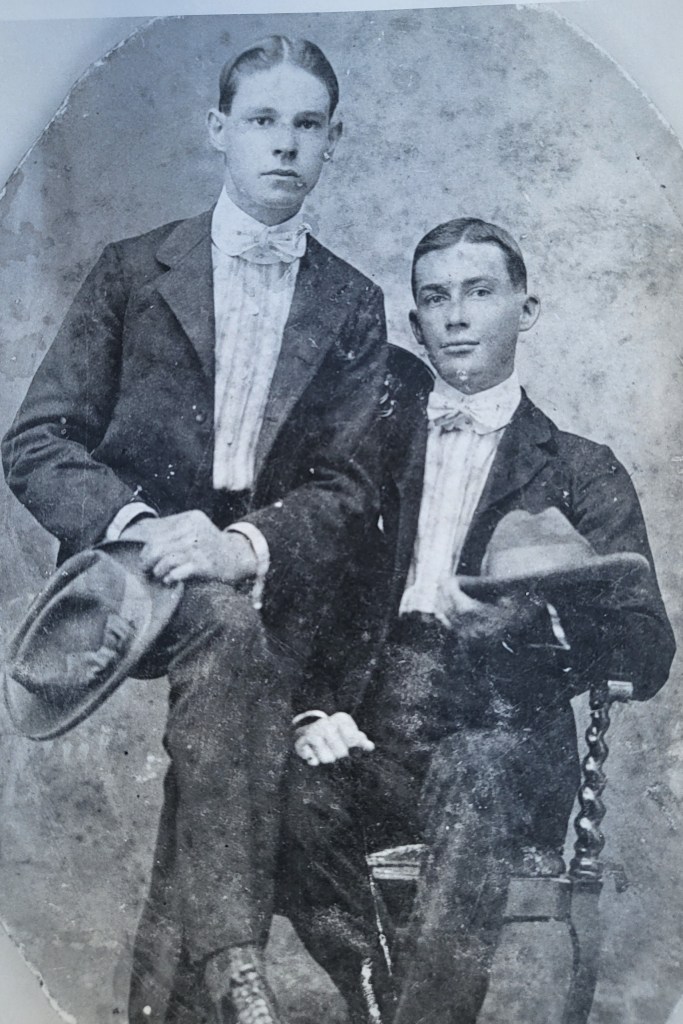

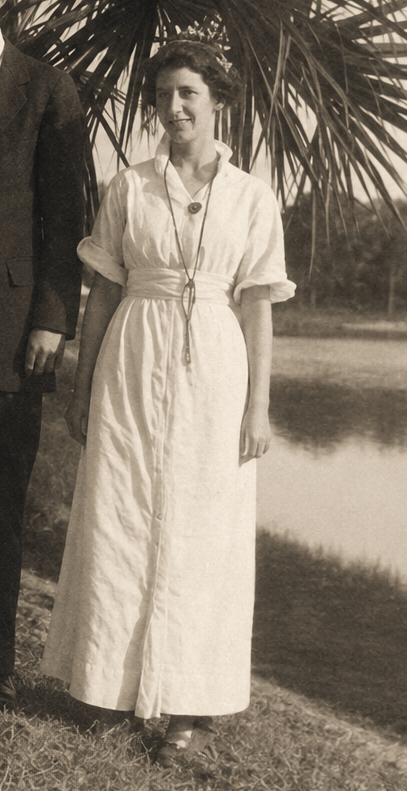
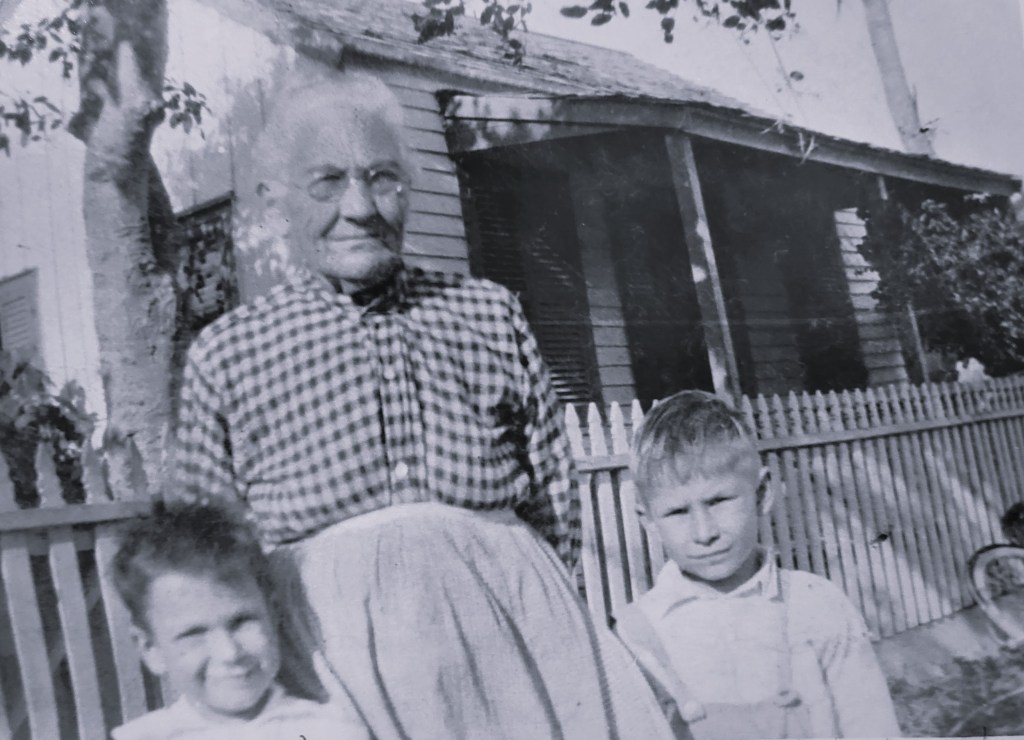
Justin died on December 29, 1900, after thirty-five years of marriage. Jane’s later life remained closely connected to her children and grandchildren. In 1910, she lived with Lela on Catherine Street in Key West, and both worked as tobacco strippers. By 1920, she was living with Belle’s household in Tampa. In 1930, she was back in Key West with her son Alfred and other family members.
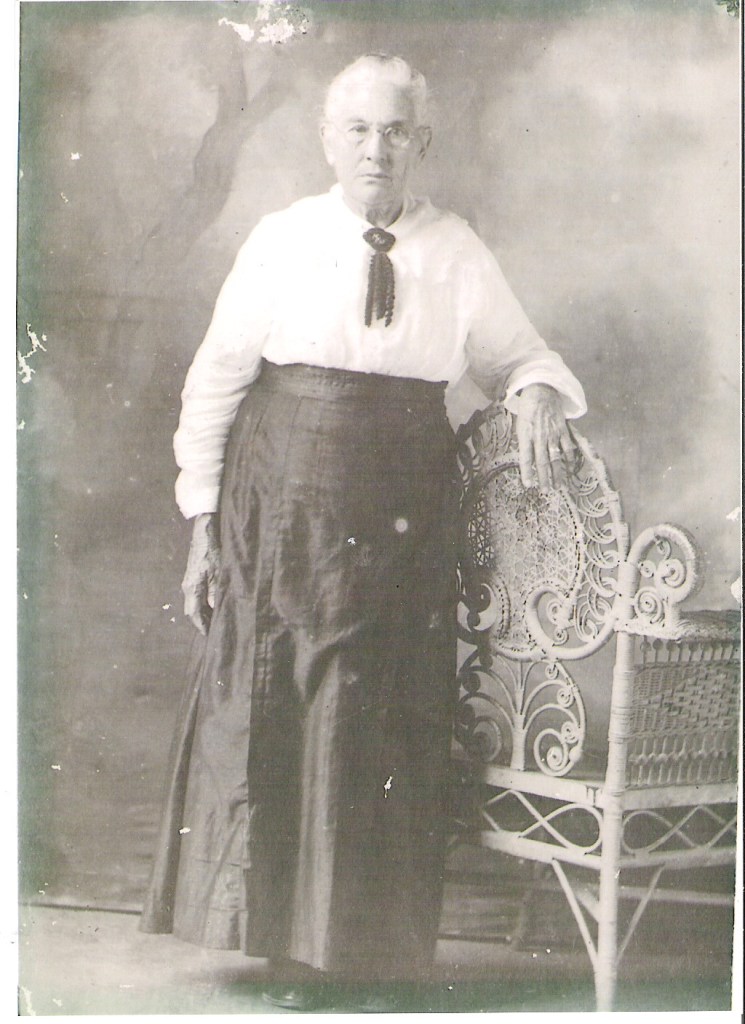
Jane died on May 6, 1933, at eighty-five and was buried in the Key West Cemetery. Her long life connected the Georgia childhood of the Hopkins family with generations established in the Florida Keys.


The significance of the 1865 outbreak in this family story lies in its possible lasting consequences.
If yellow fever caused James and Frances’s deaths, the epidemic changed who would raise their children and reshaped a newly married couple’s household.
The precise diagnosis remains uncertain. The family response is more firmly visible: Their children survived, Jane and Justin gave them a home, and the family continued beyond the loss recorded in Frances’s Bible.
Sources and research notes
Combined from the supplied biographies of Frances Elizabeth Harriede, James Hopkins, and Jane Ann Hopkins, together with Yellow Fever Research. The Bible entries, census information, and family correspondence are used as reproduced or described in those documents; the underlying originals were not independently verified.
[1] Florida Keys History Center, Monroe County Public Library, “June 19,” compiled by Dr. Corey Malcom, June 18, 2025. https://www.keyslibraries.org/post/june-19-2025
[2] Centers for Disease Control and Prevention, “Yellow Fever: Causes and How It Spreads.” https://www.cdc.gov/yellow-fever/causes-and-spread/index.html
[3] Centers for Disease Control and Prevention, “Yellow Fever Vaccine,” MMWR, 2010. https://www.cdc.gov/mmwr/preview/mmwrhtml/rr5907a1.htm
Read more about the Knowles, Lariz,and Garcia family here .
Read more biographies here.
FLORIDA KEYS HISTORY FACEBOOK GROUP: Consider joining our group for more on Florida Keys History.
FLORIDA EVERGLADES HISTORY FACEBOOK GROUP: Consider joining our group for more on Florida Everglades History.

